Walking in a Winter Wonderland – a walk down Glastonbury high street

In a normal year, the centre of Glastonbury would be bustling at this time of year, with shoppers visiting the many emporia of alternative retail culture in the town.  This year, it has been very different – because of social distancing rules, there has been no Frost Fayre, and far fewer visitors than usual for the Winter Solstice.  Nevertheless, the shopkeepers have done a wonderful job of decorating their windows, in defiantly bright contrast to a season which has seemed even darker than usual this year.  I would like to share with you a walk, in pictures, down the High Street to the Market Place and along Magdalene Street, after dark.  For me, the lit windows are like magic lanterns or stained glass, glowing with light and colour, with images and symbols which bring out different aspects of the seasonal festivals.
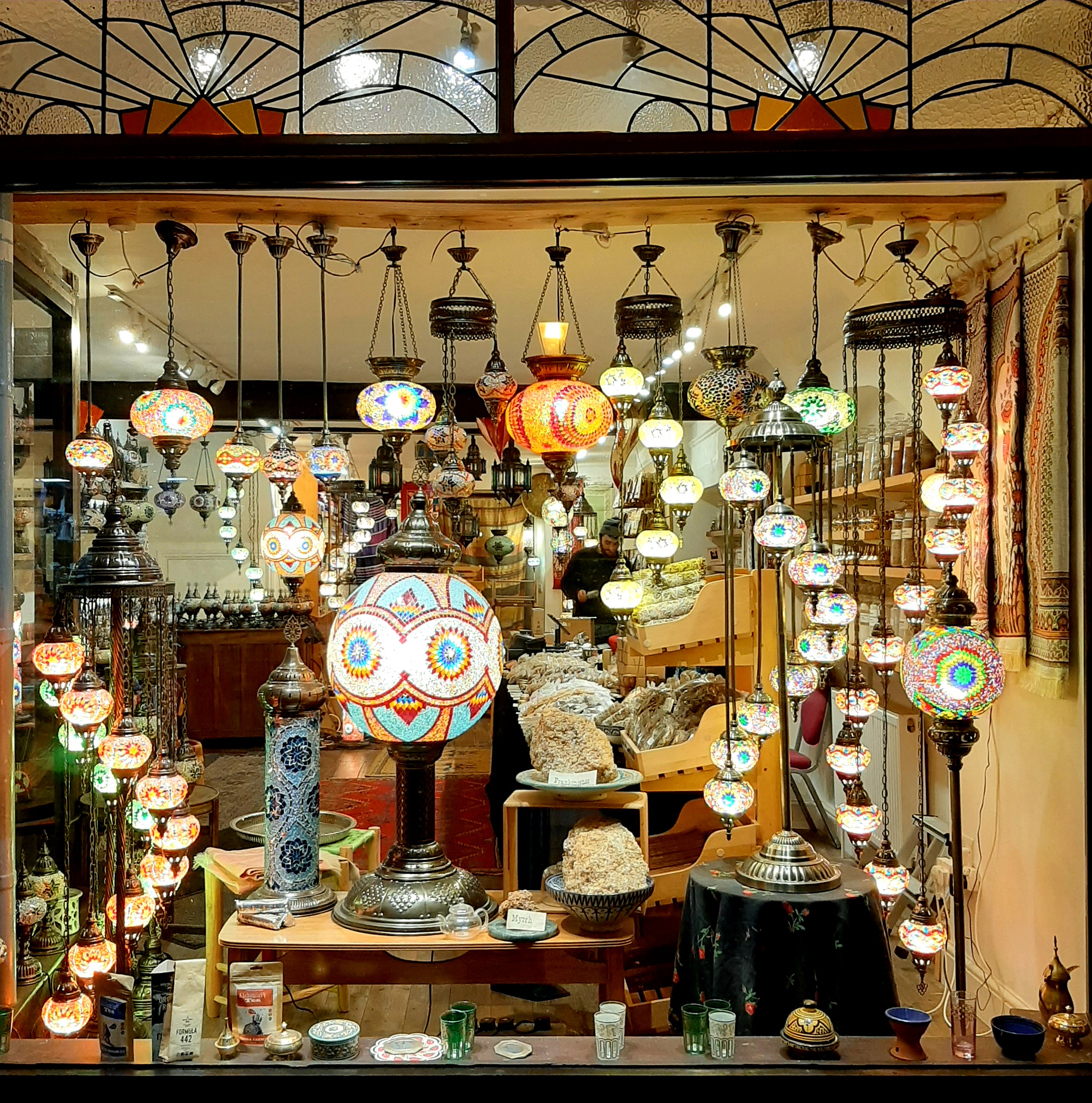
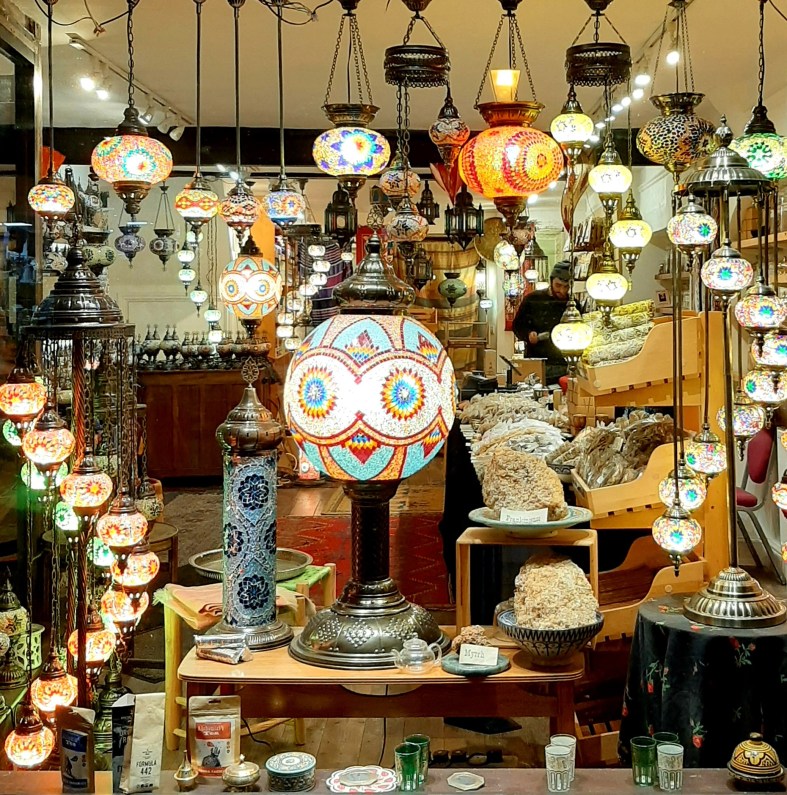
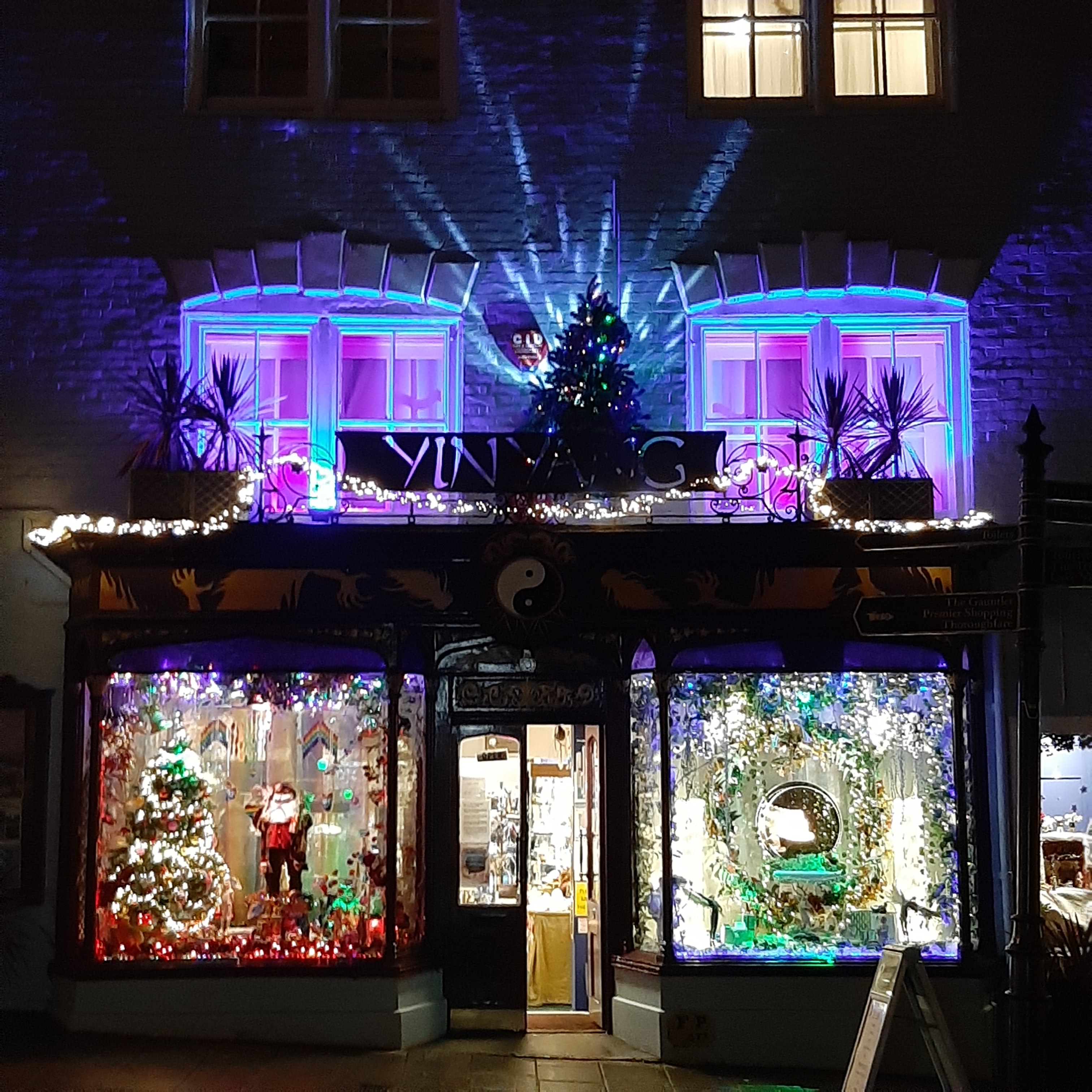
Let’s start on the High Street.  This is one of my favourite shops, with its Art Deco window panels and kaleidoscopic lanterns.  The big lump in the middle of the display is myrrh – one of the three gifts traditionally brought to the Christ child in the manger in Bethlehem, by the wise men who came from the east.  There is something of the souk about this shop, and the owner always keeps an incense burner alight outside the door, sending exotic fragrances out into the Somerset town.
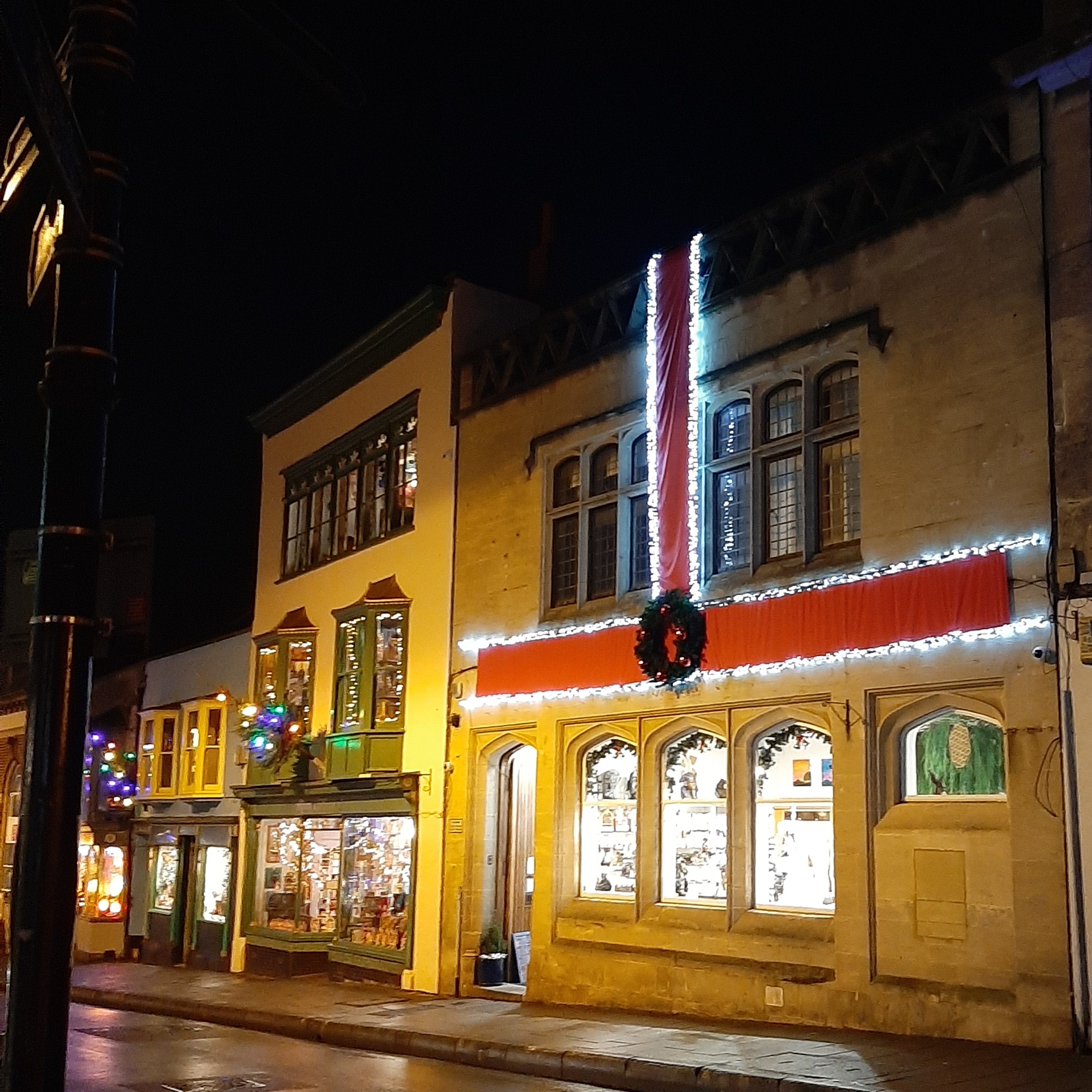
Just across the road, I like the whimsy of a gift shop wrapped up like a present, picking up on the tradition of exchanging gifts which has been part of midwinter celebrations for millennia.  I don’t envy them fixing those lights up on the roof!  I know it’s a shop which sells lovely things, and it looks very inviting, but this evening I’m photographing, not shopping, so I keep walking.

This shop has been recently refurbished, and the gilding of the lettering catches the light (gold, frankincense, myrrh).  This shop sells mostly Indian items, and its window display is full of little lights, hinting at Diwali.  The top floor, which I must admit I have never noticed in daylight, has a rainbow of lanterns suspended from the ceiling.  I think they go very well with the municipal Christmas tree on the front of the shop.

The Green Man is a significant folkloric and pagan symbol, and at this season of evergreens he is everywhere in Glastonbury.  This is a particularly fine example, framed by greenery and bringing a touch of the wildwood to the high street.

More Green Men here too, who have been joined by Cernunnos, the Celtic horned god.  The interweaving of traditions and beliefs is a major feature of Glastonbury, and is reflected in the range of merchandise which shops offer to modern-day pilgrims and visitors.  It is said that over 70 religions and beliefs are represented in the town, making Glastonbury perhaps one of the most spiritually diverse places on earth.

But amid all the paraphernalia of spirituality, people’s physical needs are catered for too, and the baker’s shop has a cornucopia of seasonal goodies in the window.  The mince pies look delicious, and I don’t even like mince pies!  Let’s hope the Scandi-style elves in the display don’t eat them all…

Across the road, one of Glastonbury’s best-known shops covers all the bases for seasonal gift-buying – a witches’ calendar for 2021, a cushion showing moon phases, a Green Man apron, magic spell kits and oracle cards, and a book on the Winter Solstice.  There is a tree, with snow-filled baubles, and a wreath with greenery and berries, and also the Tree of Life.
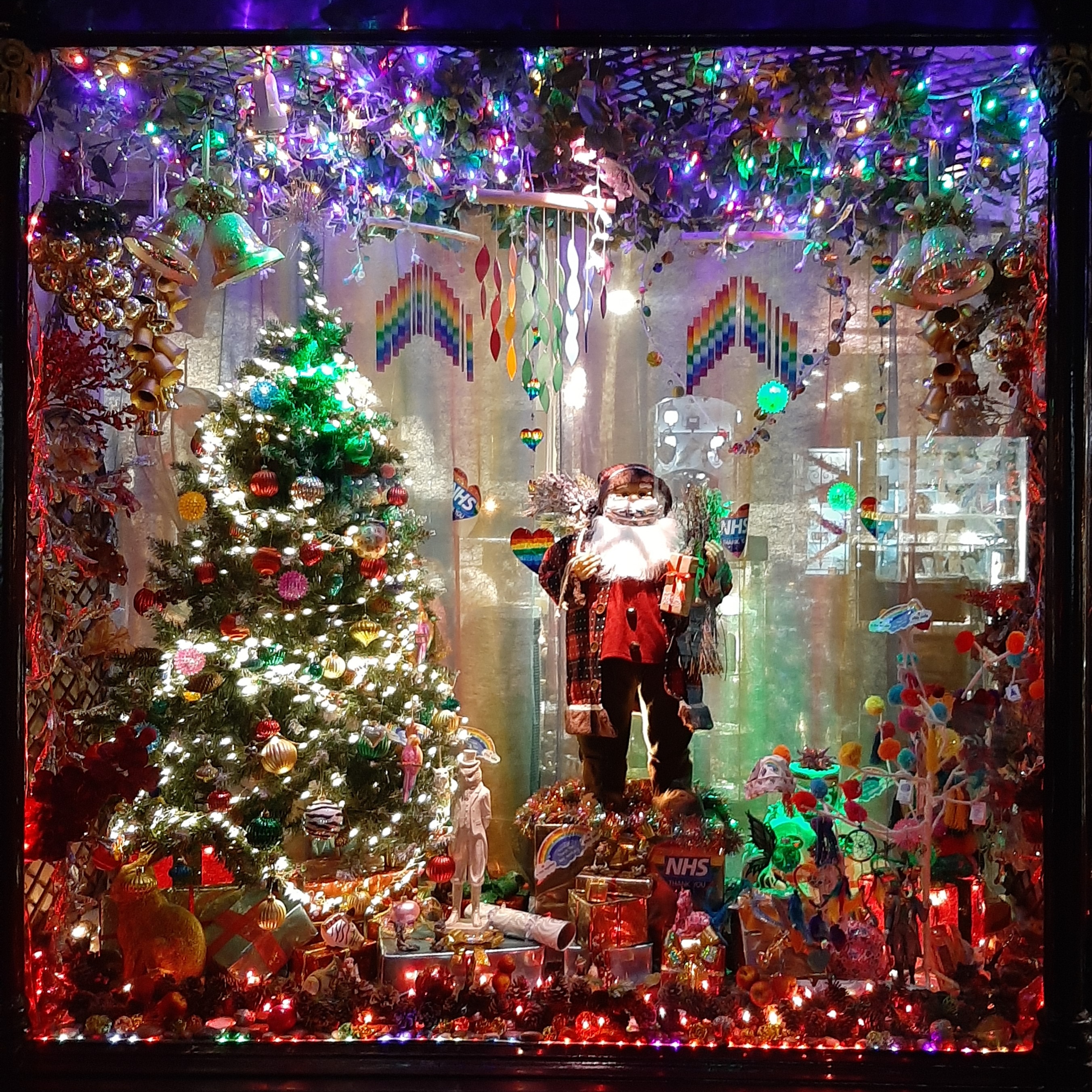
The next window seems quite conventional, for Glastonbury – a Christmas tree and Santa Claus.  But if you look closely, you’ll see that it’s not exactly the Santa of popular culture – this chap is nearer to the old images of Father Christmas, looking rather as if he’s just come walking out of the forest with an armful of kindling for the Yule fire.

A couple of doors down, we have more trees and another Father Christmas – but again, he isn’t the scarlet-clad figure with the sleigh and the ho-ho-ho.  This one is dressed in brown, smiling benevolently amid frosty-white trees, lit with cool whites and blues and populated with cuddly woodland animals.  It looks like an illustration from a children’s book, and I’d love to read the whole story.
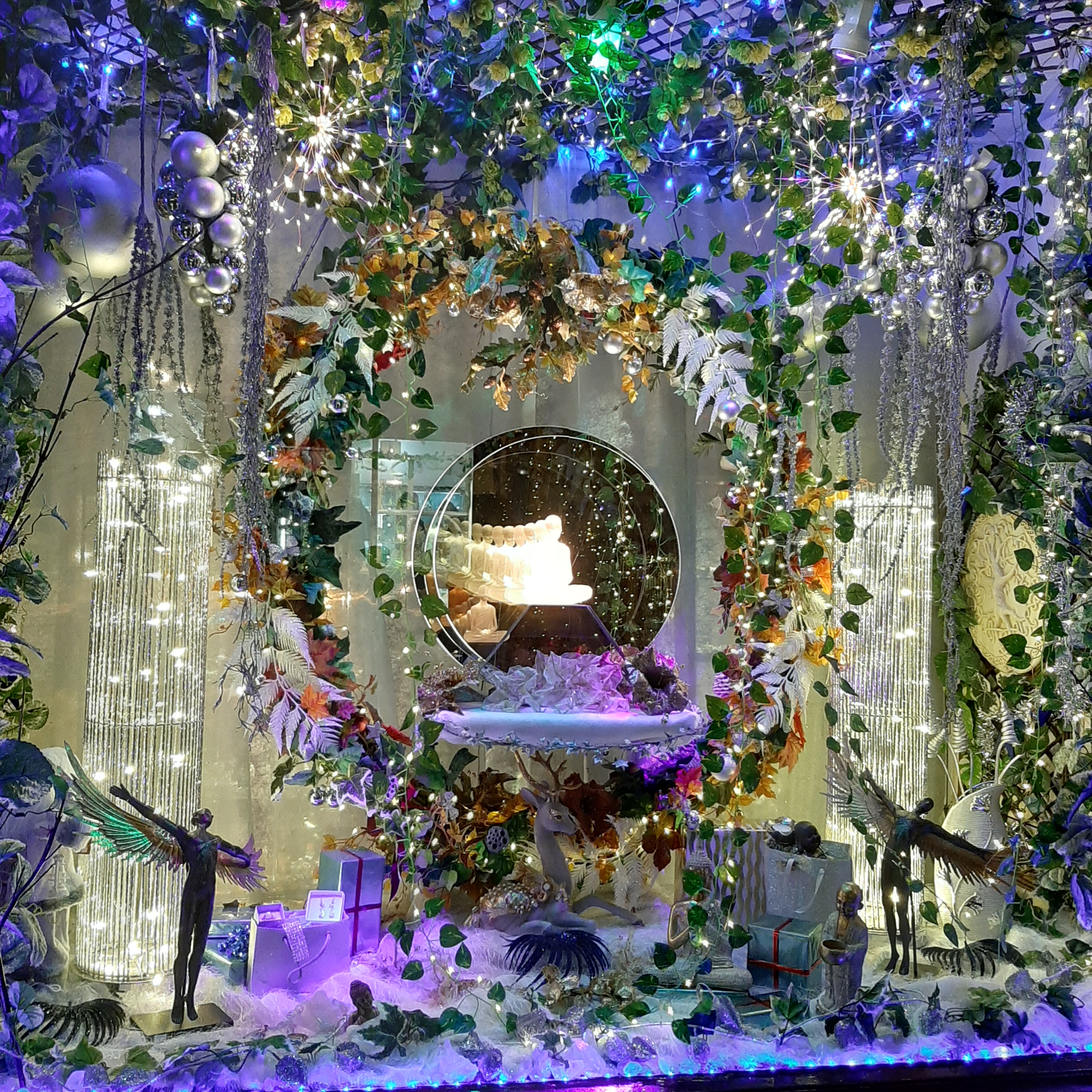
By way of contrast, the next window has nothing conventional about it at all – there may be a wreath of leaves, but they frame a seated figure of the Buddha, reflected to infinity in a circular mirror, and flanked by a pair of anglels who look like they were crafted by Jacob Epstein.  Cascades of light and washes of colour create an ephemeral magic.

We have reached the bottom of the high street, and turn left into the Market Place.  Here, there’s a clothes line of colourful stockings, strung above a vast selection of crystals.  A decorated Christmas tree sits beside geodes and ammonites, which are echoed in the signage above the shop window.
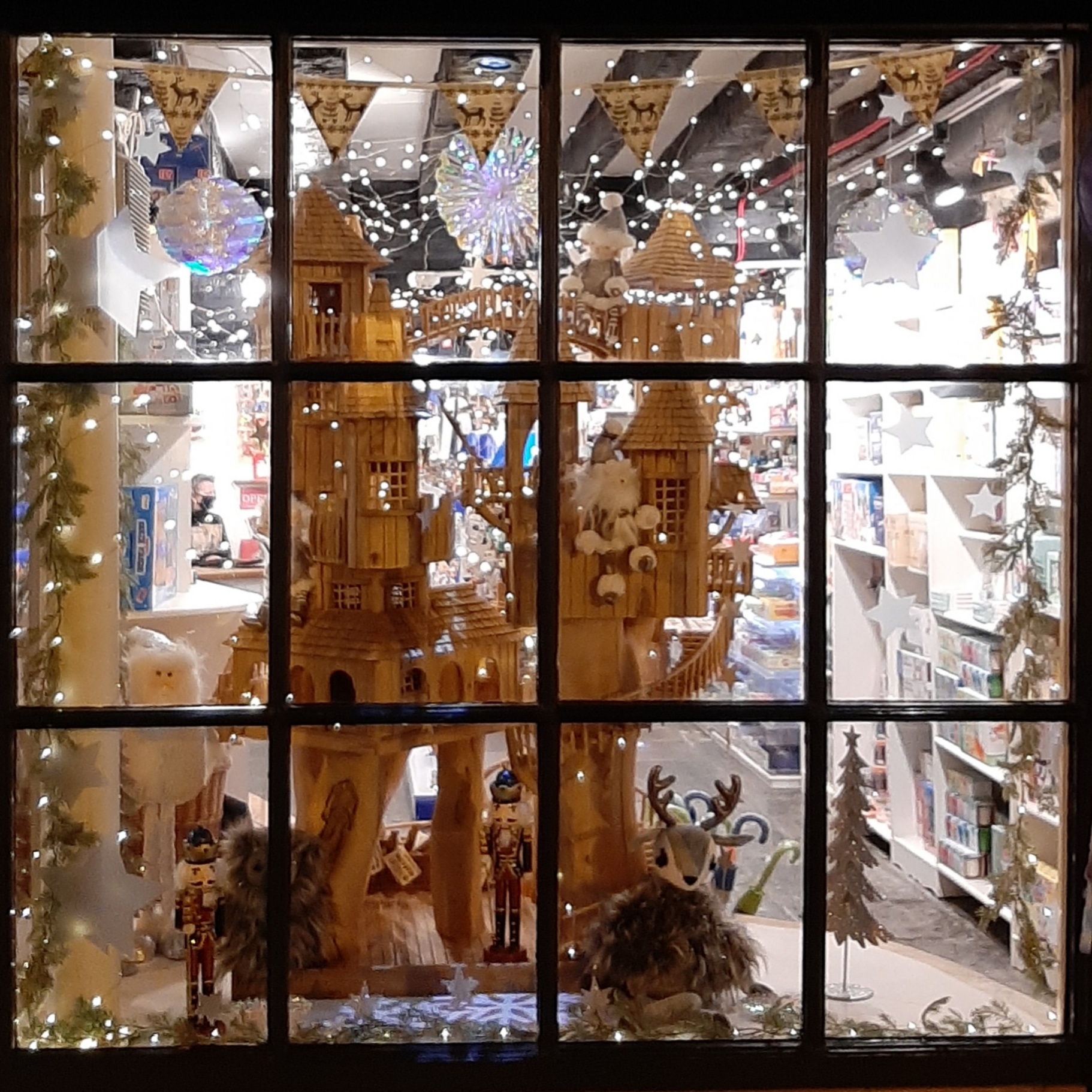
In the toy shop next door, the stunning wooden fairy tale castle which is a permanent fixture has been joined for the season by a couple of Nutcracker figures and a very cute reindeer in a winter wonderland that is all sparkle and ice.  The nod to continental Christmas customs is continued in the Nordic bunting across the window.

And so, finally, we come to Magdalene Street, and the last of the lit shops.  In a building which is one of only three in Glastonbury to survive from the 15th century, a handsome reindeer follows a trail of shining stars, with the inky-black winter sky above.

Whichever of the midwinter festivals you celebrate, may I send you – despite the particular challenges of this year – peace, love and happiness.
I am committed to making this blog freely available, and not putting material behind a paywall. As a writer, I am doing what I love – but I still have to make a living. If you have enjoyed this post, and if you are able to do so, perhaps you would consider supporting my work by making a small contribution via the Buy Me A Coffee button. Thank you!

Buy Me a Coffee at ko-fi.com

Samhain in Glastonbury – Halloween in a pandemic year

This weekend it’s Halloween – or the pagan festival of Samhain, depending on your preference.  Here in Glastonbury it’s mostly the latter, and under normal circumstances it’s marked in a big way.  For this small town, it’s not just about trick or treat, or carved pumpkins.  The Samhain procession is one of the main events of the year, with dragons (dramatic), drummers (noisy) and Border Morris dancers (downright scary).   Never mind the mass-produced fancy dress costumes of skeletons, ghosts and monsters – here it’s just as likely to be swathes of black and green velvet, horned headdresses, and real witches’ hats.  Yes, it’s fun, but it’s also at least in part about serious beliefs.

The old Celtic festival of Samhain (pronounced something like ‘Sow-en’ – sow as in female pig, rather than sow as in seeds) was characterised by feasting – the beasts which would not make it through the winter were slaughtered, and the harvest was in, so this was a time of plenty.  The spectre of death loomed, though – this was both the end of summer and the beginning of winter, with the leaves dying and the prospect of cold, hungry months ahead.  Many of those who feasted at Samhain would not make it through to feast again at Beltane, on the other side of the wheel of the year.

With the arrival of Christianity, 1 November became the feast of All Saints – All Hallows – where all the holy who had died were commemorated.  Until the Reformation, people were encouraged to pray for the souls of the dead, and especially their dead ancestors.   In much of Europe, this remains the time when families visit the graves of their loved ones to leave flowers.  Church services are held to remember those who have died.  It’s not clear whether the Celtic festival had these connotations of communing with the dead too, but certainly modern pagans speak of this being a time when the veil between the material world and the world of the spirits is at its thinnest, and it is possible to move between the two.  This links to folklore around Halloween (All Hallows’ Eve, the evening before the festival) when this is the night for ghostly apparitions, when the dead, witches and other supernatural beings walk abroad.  And whilst many people, quite understandably, deplore the recent advent of ‘trick or treat’, with its element of threat and licence to misbehave, the history of going from house to house, often in costume, begging for food and playing pranks dates back at least a couple of hundred years in the British Isles.  In some areas it even has the name ‘Mischief Night’.  Carved pumpkin lanterns may be a recent import from across the Atlantic too, but in various parts of the country – and especially here in Somerset – turnips or mangel wurzels were hollowed out and made into lanterns, the carved faces said to represent the dead and intended to frighten.

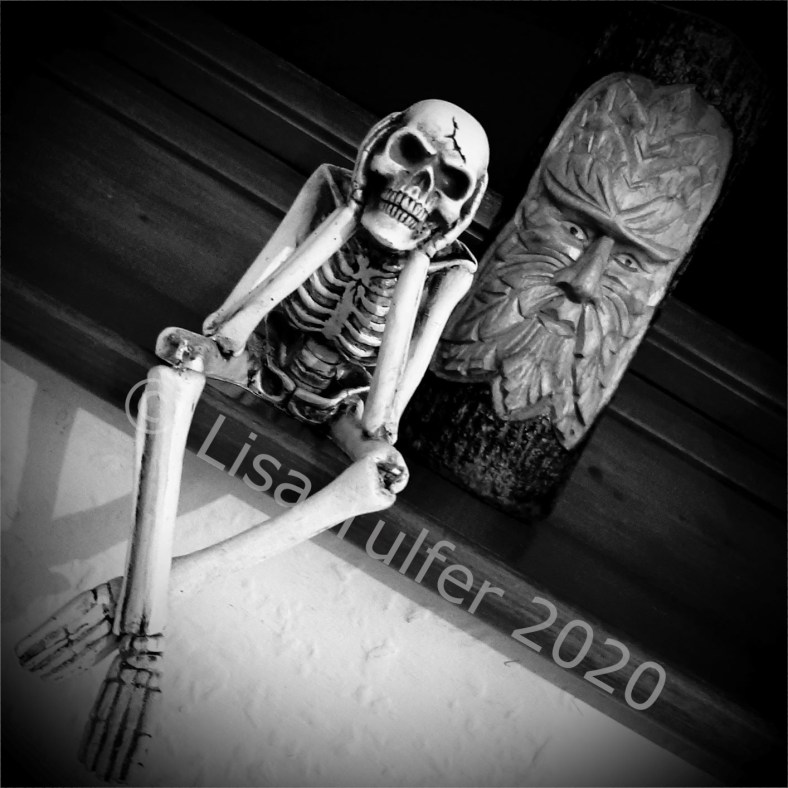
Black and white image of a skeleton ornament and a Green Man carving.

These characters live on the window sill in my study

Samhain in Glastonbury will be a rather tame affair this year – the rules preventing large groups gathering, intended to limit the spread of Covid 19, mean that no processions will take place.  The dark-clad Border Morris dancers will not leap, roar and whoop, whacking their sticks and running into the crowd.  The red and white dragons will not weave their way up the High Street, accompanied by drum beats as loud as fire-crackers.  The revellers, many of them robed, cloaked, masked or sporting headdresses with horns or greenery, will not process behind them, calling out to the spectators and encouraging them to join in.  The many visitors from all over the world who usually come to Glastonbury to celebrate Samhain will not be here, kept away by travel restrictions and quarantine regulations.

Death had become remote and sanitised in Western society, and the yearly round of festivals – Christmas, Valentine’s Day, Mothers’ Day, Easter and so on – resolutely upbeat, with no acknowledgement of a corresponding darker side to life.  This year, the pandemic has meant that death has become part of public life again.  Perhaps this year, more than ever, we need to use this festival to come to terms with fear and death, and shake a defiant fist in the face of approaching winter and darkness.

I am committed to making this blog freely available, and not putting material behind a paywall. As a writer, I am doing what I love – but I still have to make a living. If you have enjoyed this post, and if you are able to do so, perhaps you would consider supporting my work by making a small contribution via the Buy Me A Coffee button. Thank you!
Buy Me a Coffee at ko-fi.com

Making people proud of where they live – the public art of the Glastonbury Mural Trail

A year ago this week the Glastonbury Mural Trail was launched as part of Somerset Art Weeks.  Murals have been part of Glastonbury life for decades – at least since the 1960s when Pat Leyshon decorated the front of Pat Li Shun, her business at the top of the High Street, with colourful flowers – and have always sparked controversy.  I have been visiting Glastonbury since the 1990s, and for years have been aware of various murals springing up around the town (and sometimes disappearing again by my next visit), but the Mural Trail took the concept to a whole new level.  When I came to live in Glastonbury this summer, one of the first things I did was to pick up a Trail leaflet at the Glastonbury Information Centre, grab my camera, and walk the Trail.

Image of mural

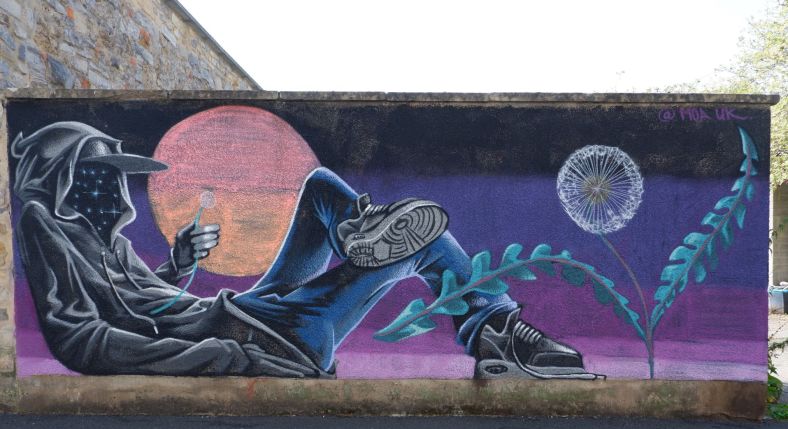
Glastonbury mural by M.O.A. (John Mason, LUVM, SYM, DMK, SIKOH)

Image of mural

Drapers – artist unknown

Following the Trail was great fun – the murals are not always in obvious places, or easy to find, and that’s part of the appeal, as it becomes a kind of artistic treasure hunt.  It was a great way to explore parts of the town I didn’t know, sparking many conversations as I enlisted the help of passers-by in searching for elusive murals.  The Glastonbury Mural Trail is also a showcase of serious artistic talent.  The variety of styles, subjects and scale means there must be something here for everyone, and I even came across a few that weren’t on the Trail Map (I was to find out why later).  There’s still one I haven’t found, because it’s in a pub garden and I just haven’t been organised enough to get there when the pub is open.

Image of mural

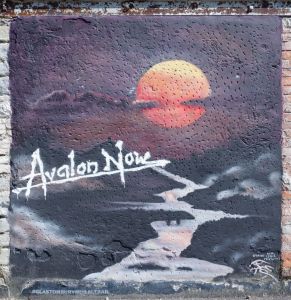
Avalon Now, by SYM

Having enjoyed the Mural Trail so much, I wanted to know more about how it came to exist, and what the motivations behind it were, so I arranged to meet Kim von Coels, who facilitated the creation of the Trail for last year’s Somerset Arts Weeks.  Socially distanced in the garden of her Glastonbury home, Kim tells me that there had previously been a leaflet produced by Jim and Caroline at the Pilgrim Reception Centre, listing the then existing murals.  Kim – who, like me, loves maps – had produced a Glastonbury town map, and was approached by the Town Clerk, Gerard Tucker, to design a map of the murals.  She agreed, but only if the Town Council would give its blessing to the creation of new murals (subject to the necessary permissions).  The project was born.

Image of mural

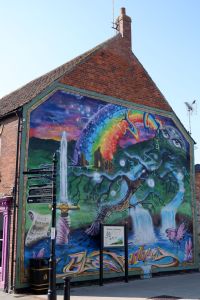
Goddess Hall, by Jon Minshull

Image of mural

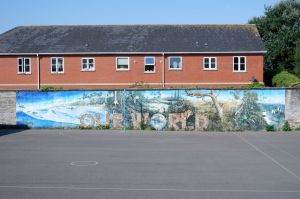
Our World, by Jon Minshull

A Facebook group was set up, and its members started researching the possibilities.  They found that, even in a conservation area, murals could be painted in most locations, with the permission of the wall owner, provided that the wall had been previously rendered or was of block construction, and that the subject matter was not offensive.

Image of mural

Wildwood (detail) by M.O.A.

Next came callouts – for artists who wanted to paint murals, for owners of walls who wanted murals, and for businesses willing to cover the costs with sponsorship.  Between April and September of 2019 Kim operated a kind of matchmaking service, connecting artists, wall owners and sponsors, and getting the necessary permissions.  As an example, she tells the story of the mural in Bere Lane, where the owner of the wall was keen to have a Viking theme for their mural, which meant that she was able to get sponsorship from Wyrdraven, the Viking shop in town.

Image of mural

Glastonbury Experience (detail) by Jon Minshull

Image of mural

I think this may be my favourite!  By Sikoh

The involvement of local businesses was key, says Kim, and Jill Barker of the Chamber of Commerce and Tourism helped make this happen.  Nobody got paid – there were just a few small honorariums for artist who would not otherwise have been able to participate – but sponsorship ensured that no one was out of pocket.  Support was both financial, and in kind (for example from Thorndown Paints), with some firms sponsoring the project as a whole and others sponsoring specific walls (for details of all sponsors, see the Glastonbury Mural Trail leaflet).  All wanted it to be good and successful, and the Town Council paid for the Mural Trail to be part of Somerset Art Weeks in September 2019.  At the official opening at the skate park, hundreds of people turned up, and Kim admits to being “totally blown away” by the positive response.

Image of mural

Avalon Marshes by Jon Minshull

What, I wondered, gives Kim most satisfaction about the project?  She has no hesitation in replying.  For her, the joy is that it’s free, it’s accessible to anyone, whenever you want – it’s public, it’s always open.  And it cheers people up and makes them happy.  It has, she admits, been a lot of hard work, but she wants there to be murals, to have people able to paint them, and people able to enjoy them.  She loves that people who normally don’t like graffiti are embracing the murals.  Kim feels it’s important that the subject matter of the mural is “universally pleasant – who doesn’t like nature, flowers, animals, landscapes?  It’s great when art creates a conversation but that’s not what the Mural Trail is for.”  Public art, says Kim, “makes people proud of where they live” and she’s keen to take the Mural Trail beyond the main thoroughfares into “the corners” of the town.

Image of mural

Sugar Skull by Sophie Alexi/The Krumble Empire

Image of mural

Winged Bug by Sophie Alexi/The Krumble Empire/Doodledubz

Kim has herself collaborated in the painting of four of the Trail’s murals – whichever way I walk from home to the High Street I pass one of her creations!  I ask her which is her own favourite, and she replies that she is very fond of the mural at the side of Abbey Park (number 25 on the current map) as it was painted by Oksana Gaidasheva from one of Kim’s photographs.

Image of mural

Globe Inn mural by Oksana Gadaisheva

The Glastonbury Mural Trail continues to grow.  At the time of the launch there were 26 murals, and Kim estimates that there are another 7 or 8 now – she thinks the total will be up to 36 by the time she produces the revised Trail leaflet in a few weeks.  Some have just happened – especially during lockdown – and then she is told about them so that she can add them to the Trail.  In other cases, artists contact her – “find me a wall!” – although that’s getting ever harder as “there are only so many walls!”

Image of mural

By DMK

Kim von Coels is an artist and photographer.  She also works at Heart of the Tribe, a new gallery in Glastonbury.  You can read more about the Glastonbury Mural Trail, and download a leaflet, here.  There is also a Glastonbury Mural Trail page on Facebook.  For more about colourful Glastonbury, take a look at this post on the Normal for Glastonbury blog.

Looking forward to Autumn – why September is my favourite month

I always think that autumn (fall) gets a bit of a raw deal in the popularity stakes.  Spring has lots of fans, summer is everyone’s favourite, and even winter has its proponents (due in no small part, I suspect, to the midwinter festivals of December and their associated jollification – I should perhaps note here that I am writing from a northern hemisphere perspective).  But apart from the show of colour in the trees of New England, and to a lesser extent elsewhere, autumn gets a bit of a bad press.  It’s the season when the heating goes back on, the days shorten, the casual linen and cotton of summer gives way to woollies and coats, equinoctial storms batter western coasts, and summer holidays are well and truly over.

There is one thing I hate about September – wasps.  In the UK, September is peak season for wasps, timed to allow them to feast drunkenly on the apple harvest.  As I both have a phobia about wasps and also react very badly to their stings, this makes being outdoors – and especially eating outdoors – stressful.  But other than the wasps, not only is the autumn my favourite season, September is my favourite month.

For me, the year turns several weeks earlier – usually in early August, although in 2020 it was in mid-July.  One morning, you go outside and realise that the air feels different.  It’s not necessarily colder – just different.  There is a sense that it is the beginning of the end of summer, although often the hottest weather is still to come during August.  The swifts, which have been screeching around the summer skies, are ready for their epic migration to Africa, and suddenly, from one day to the next, they are gone.

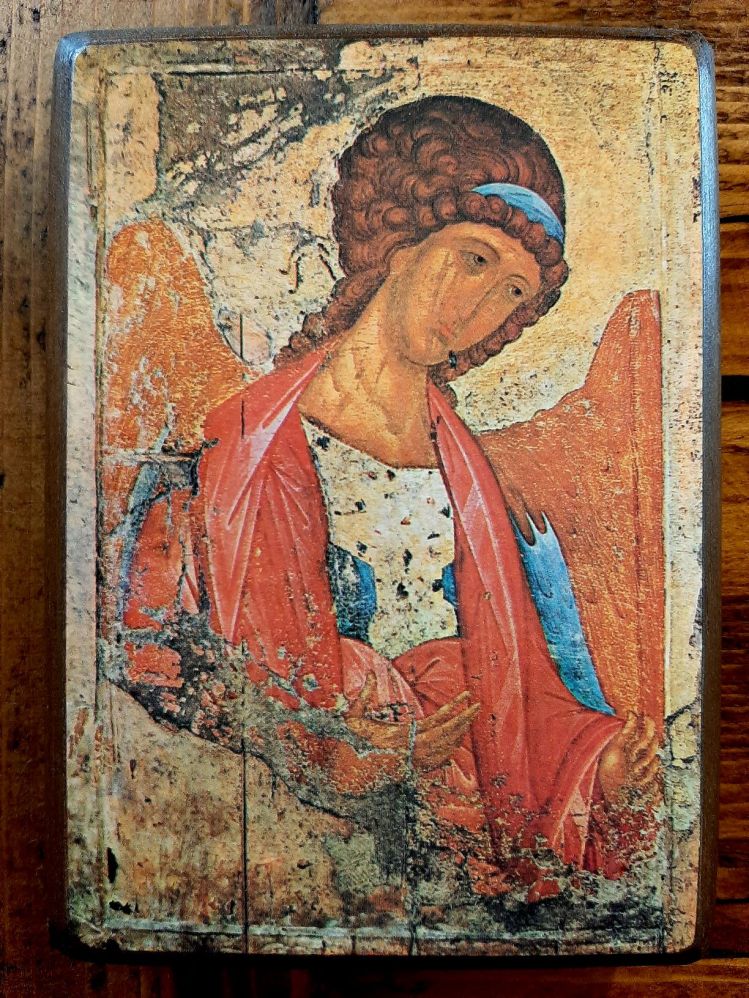
The start of meteorological autumn in the northern hemisphere is 1 September.  This makes a lot of sense – historically, the grain harvest was pretty much all gathered in by the end of August (as evidenced by Lammas (Loaf Mass, or festival of the First Fruits) on or about 1 August, in thanksgiving for the harvest.  Before modern farming practices, the land would then rest until January, when ploughing would begin for the next year’s crop.  Geese fattened on the stubble would be eaten on the feast of St Michael and All Angels, on 29 September.  St Michael the archangel is probably my favourite saint – whilst I take a dim view of his persecution of dragons (I like dragons), I like that he is the saint associated with high places, and churches on hilltops in remote locations are often dedicated to him (for example, Mont Saint Michel in France, St Michael’s Mount in Cornwall, St Michael’s Church on Brent Tor in Devon, and the tower on Glastonbury Tor, which is all that remains of St Michael’s Church, to name but a few).

Photograph of an Orthodox Christian icon of St Michael the Archangel

September’s weather often seems better than August (hot and humid) or October (wet and windy), and most years I choose to go on holiday then, to take advantage of the weather and also of the relative quiet once the children have gone back to school.  For September is a month of new starts, with the school year in England starting at the beginning of the month, and the university year at the end (in some universities, the autumn term is still called the Michaelmas Term).  It feels fresh, full of potential and possibilities, of projects begun in hopeful anticipation.  The days are still long – the curse of the end of British Summer Time doesn’t take effect till late October – temperatures are pleasant, and mornings start to be crisply or mistily autumnal.  The archetypal poem about autumn (John Keats’ Ode to Autumn) https://www.poetryfoundation.org/poems/44484/to-autumn has a melancholy tinge to its celebration of the season, but for me, September is more upbeat, full of promise and purpose rather than an elegy for the summer that is ended.  I feel energised, roll my sleeves up and get stuck into life and work.  Although it’s many years since the academic year governed my working calendar, I still find that this is the month when I gear up to start new work, find my mojo again, and start looking forward.

This September, I am back in Somerset, becoming re-acquainted with the landscape – coasts, hills and wetlands – ancient landmarks, and contemporary communities.  No doubt I shall be writing about some of them too.  Perhaps, especially if you are in the northern hemisphere and it’s the start of autumn where you are too, you might also like to go exploring during this month of September, watching out for the signs of the changing seasons.  Let’s enjoy it and make the most of it before the darkness of winter closes in.

The view from here – first impressions after relocation

Readers of my last post will be aware that I have just moved house, and will hopefully forgive the lack of posts over the last couple of weeks.  To begin with, of course, we weren’t able to engage with the town and surrounding area as much as we would have liked because of the tedious but necessary business of unpacking, spring cleaning the house for a nice fresh start, and generally getting very tired and achy!  However, the particular bonus of this house is the view from the study, which is on the top floor.  It has windows front and back, giving panoramic views of the town of Glastonbury and the surrounding countryside.

One way, the view includes the iconic Glastonbury Tor, with its medieval tower of St Michael (all that remains of the church which used to crown the hill).  A site of pilgrimage since at least medieval times, the Tor continues to draw modern day pilgrims and visitors, who climb it for a variety of reasons – spiritual, sightseeing or artistic.  Since we have been here, I have never seen the Tor without people on it.  Even at night, the lights of people’s torches (and, at Lammas, a fire spinning display) are visible, and when the Sturgeon Moon rose last week there were dozens of people on the Tor to witness the moonrise.

Photograph of Glastonbury Tor, with a road in the foreground and trees framing the view.

Country road leading to Glastonbury Tor – image copyright Robert Bruce 2020

Below and to the right of the Tor, the view takes in the rooftops of the town – mostly red pantiles – and the gardens of the townhouses, built on land which, a century or two ago, used to be orchards.  The tower of St John’s church rises above the rooflines, and at the moment a pair of peregrine falcons is raising a brood of chicks on the tower – the young’s raucous cries echo across the town when the parents arrive with food.  They are so loud, even at this distance, that for a couple of days I thought one of the neighbours had a particularly noisy parrot!  It’s such a privilege to see these amazing birds soaring above the town.

Further to the right again is Wearyall Hill, where Joseph of Arimathea is reputed to have planted his staff in the ground, which grew into the Holy Thorn, a thorn tree which bloomed twice a year – at Christmas and Easter – and whose successors still grow at various locations around Glastonbury.  Sadly the successor which grew on Wearyall Hill has now been removed due to persistent vandalism.

Beyond Wearyall Hill are the Polden Hills, where the modern A39 main road follows the ancient ridgeway to Avalon.  During the catastrophic floods in the winter of 2013/14, my usual commute across the Levels was under several feet of muddy water, so I drove along the A39 instead, looking out across floodwater as far as the eye could see, with only the odd tree or rooftop sticking up above the water.  It gave an insight into how these marshy lowlands might have looked before sea levels fell, and the land was ‘improved’ for farming.

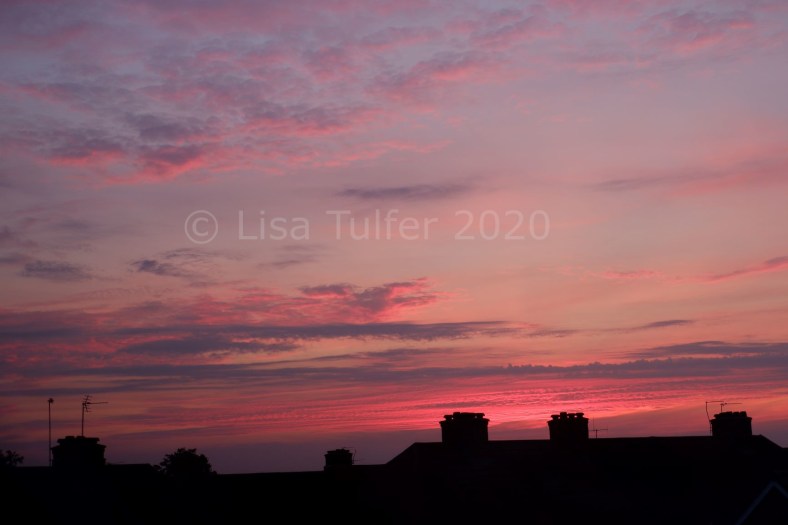
From the other window, the sweep of the Mendip Hills runs east to west in the distance.  From this window, we can see dramatic sunsets – the skies in this part of Somerset are particularly striking, which I have always attributed to the conjunction of the open flatlands of the Levels and the way the light reflects off the Bristol Channel.

Sunset over rooftops

In between the unpacking and cleaning, though, we have managed to wander into town from time to time.  Glastonbury’s High Street is not typical of a small town in a rural county – for ‘normal’ shopping, you need to go a couple of miles down the road to Street, which as well as a ‘normal’ high street has the country’s first shopping village, built on the former Clarks shoe factory site.  Glastonbury’s retail offering is something else entirely – crystals, books on esoteric subjects, tie-dyed clothing, Buddha statues, candles in all the colours of the chakra rainbow, Goddess figurines, Green Man car stickers, herbs and incense.  Buskers can include dreadlocked drummers, haunting folk singers, or jazz saxophonists.  At the Tuesday market, you’ll find the fast food outlets selling not hot dogs but vegan falafels.  It’s lively, chaotic, a bit ‘lived in’, and there’s something unexpected around every corner.  I’ve been walking – and photographing – the Glastonbury Mural Trail, which I will be writing about in a future post, and it has taken me to parts of the town centre I never knew.  And of course when the current heatwave abates a little, we will climb the Tor again (and take binoculars to try to locate our window!).

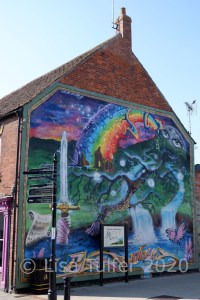
Photo of colourful mural in Glastonbury

I mentioned Joseph of Arimathea and Avalon in passing above  – Glastonbury is full of history, legend and myth, and a huge amount has been written about the various themes associated with it (Avalon, King Arthur, Joseph of Arimathea, Gwyn ap Nudd, the Holy Grail, the Glastonbury Zodiac, the Goddess, Nolava, the Chalice Well, Bridget, and Glastonbury Abbey as a site of Christian pilgrimage, to name just a few).  This isn’t the place to add to that, although I’m sure I will be touching on aspects of it in this blog from time to time – it’s impossible to live in Glastonbury and not engage with the various strands of spirituality and legend which are the town’s raison d’être and, frankly, why would you not want to?!  Glastonbury is unique, crazy, enchanting, infuriating, but never boring.  If you would like to know more about Glastonbury* and its vibe, I recommend Vicki Steward’s excellent blog, Normal for Glastonbury.  She has recently produced a book, also called Normal for Glastonbury (available as an e-book and in print), which pulls together a selection of her blog posts – her portrayal of Glastonbury life is humorous and well-observed, and makes a very good read.  Again, highly recommended.  And no, I’m not on commission!

* When I talk about Glastonbury, I mean the town in Somerset – not the world-famous festival, which in fact takes place in a field a few miles away.  If you watch footage of the festival, you can see the Tor in the distance, behind the Pyramid Stage.

The next chapter – relocation and the art of moving house

I promised in my last post that I would let you know why I have been writing fewer blog posts recently.  Well, for the last few weeks I’ve been tackling practical jobs and to-do lists, while trying to get ahead with deadlines for commissioned articles in order to create a few weeks’ breathing space for myself.  The thing is, I’m moving house next week.  Not just moving house, but relocating to the other side of the country.

When I left Somerset some years ago to move in with my partner, I didn’t imagine I’d be going back any time soon – but life (and my partner) had other ideas, and earlier this year the decision was made that we would relocate.  We’ve always been great at timing – for example, we booked the Registry Office and only weeks later realised that we’d picked a Bank Holiday weekend, thereby condemning ourselves to a future of trying to book anniversary dinners and weekends away at peak holiday time.  In this instance, no sooner had we decided to start a long-distance house hunt than lockdown was announced.  However, despite all the obstacles and frustrations, and with a lot of help along the way from Robert at Robert Bruce Relocation, four months on we have found our new home and are preparing to move.

For a number of excellent reasons, I have moved house quite a few times since the turn of the millennium.  This is what I have learned about moving house:

  1. If you can avoid moving, do so. It’s expensive, stressful and time-consuming.  You need to be very convinced that the benefits of your new location are worth the upheaval.
  2. If you can’t avoid moving, it’s great if you can keep the move local.  Long distance moves are exponentially more stressful and fraught with complications.
  3. Ensure that you have the following items in your possession (not on the lorry):
    • toilet roll
    • emergency chocolate
    • a kettle and/or whatever you need to make and drink hot drinks of your choice, including at least one teaspoon
    • cleaning materials (your new home will never, ever, be as clean as you’d want it to be when you get there)
    • keys to your new home AND to your old home (you’ll need to lock it up after you!)
    • the keys to your car (sound obvious? Maybe, but a friend of ours managed to leave their car keys in the drawer of a dresser which was loaded onto the removal lorry…)
    • if you are as paranoid as we are, all important personal documents, your passport and driving licence
    • phone chargers
    • hand soap and a hand towel (to go in the bathroom when you arrive, together with the toilet roll)
    • a toolbox (there will always be something which needs tools in the first 48 hours, while your stuff is still in boxes)
    • a doormat (saves a lot of floor cleaning)
    • at least one bin bag
    • a meter key (you’ll need to take meter readings at both ends for the benefit of the utility companies)
    • hand luggage (a couple of changes of clothing, your daily toiletries, and a bath towel) to tide you over until you can start unpacking
    • Paracetamol
    • a mobile phone, for guiding the driver of the lorry when they get lost, photographing the meter readings, and using as a torch to find the stopcock in the back of the cupboard under the sink.
  1. Find out (ideally before you get there) where your nearest hardware shop or DIY store is. You will need at least 5 things in the first 48 hours.
  2. Find out where your nearest takeaway is. You’ll need it for several days.  Make sure you know where your plates and cutlery are (or add a picnic set to the list in point 3 above).  Eating egg fried rice out of the carton with your fingers is not recommended.  Trust me on this.
  3. You will need to leave your fridge and freezer to stand for a while to settle after their journey. Just make sure you remember to switch them on at some point BEFORE you do your first large food shop.
  4. Write your new address down somewhere or store it on your phone. You will go blank when asked for it.  For several weeks, possibly longer.
  5. There will always be at least one Really Important Contact whom you forget to notify of your change of address. Just make sure it’s not your bank.
  6. The spare light bulbs from your old home will never fit the light fittings in your new home.
  7. It is a universal law that the more you spend on curtains, the less likely they are to fit in your next home.

Despite all that, I am excited as well as apprehensive, and very much looking forward to being back in Somerset.  It’s the place where – notwithstanding a mixed heritage and a nomadic childhood which left me feeling rootless – I have felt most settled and at home.  Thanks in no small part to the decluttering process which I have written about in a previous blog post, this move isn’t as daunting as some have been.  Wish me luck – I’ll see you on the other side!

Photograph of colourful mural of Glastonbury Tor.

(Can you guess from the photograph where we are moving to?)