Where did my interest in historic buildings, and the way we use them today, first start? Well, it all started with a quote from Winston Churchill. I can pinpoint the exact moment: I was a second-year undergraduate, sitting in a seminar on the history of Christian liturgy, and the lecturer was getting us to think about how the layout of a building both affects, and is affected by, the activity taking place within it. He quoted Churchill’s words: “We shape our buildings, and afterwards our buildings shape us.”
In 1943, Churchill was advocating for the retention of the adversarial, rectangular layout in the re-building of the Commons Chamber of the Houses of Parliament in London, following bomb damage in the Blitz during WWII. He attributed the two-party system, which he saw as the essence of British parliamentary democracy, to this layout.
In that moment, I realised that Churchill’s principle applied not only to ecclesiastical architecture and the layout of parliamentary debating chambers, but to the buildings we live and work in. At that time, my home was a tiny eighteenth-century stone cottage in a small town in North Wales, which showed signs of having been altered a number of times to accommodate changes of use. During its lifetime, it had reputedly been a mead house, and more recently a café, as well as a living and working space for artisan households (as evidenced in more recent centuries by census records). Meanwhile, at the heart of my university campus was the original nineteenth-century building, itself a pastiche of a medieval Oxbridge college – a style reflecting the ambitions of the founders for their fledgling educational institution.
I went on to live in a series of 19th-century terraced cottages, including one that was built for the workers on the newly-constructed railway; two Edwardian townhouses, one of which had been built as a living and working space for a family of glove-makers; a number of 1960s and 1970s boxes, in various stages of dilapidation, with the sensible, regular-shaped rooms that were a hallmark of the period, but all of them a challenge to make homely; a faux-Georgian 1980s house, complete with Grecian columns beside the front door and plasterwork urns and garlands on the fire-surround, but leaky windows and a collapsing sewage drain; and a smart newbuild with four bathrooms but next to no storage (which gives an insight into how architects envisage how people will live in the houses they design), which nevertheless proved to be a nice place to live. I learned that the nicest-looking houses don’t necessarily make the nicest homes, and that each property influenced how I lived through layout, storage (or the lack of it), heating (or the lack of it), and how safe and at home I felt there. I learned that I generally have a preference for older properties, made of stone or brick, which have stood for a century or more and promise to carry on standing – and sheltering those who live there – for the foreseeable future. I learned that I don’t mind the ghosts and echoes of previous lives that have been lived in the buildings I call home, but that I do mind houses that are soulless and sterile, however well-designed they may be.
Some years after the Churchill epiphany, I went back to university to study medieval monasteries, focusing on the relationship between their architecture and infrastructure and the patterns of daily living this facilitated. I then studied vernacular architectural styles, in particular becoming fascinated by palimpsests as evidence of how the people who lived and worked in these buildings continued to shape the evolution of the buildings that had shaped them.
I worked as a consultant, enabling communities to imagine new ways to use their historic buildings, balancing the need for flexible, warm and accessible places with the need to conserve the character and historic significance of the building. And I now advise on appropriate and effective energy efficiency measures to ensure that traditional buildings and their occupants continue to survive and thrive in the 21st century and beyond. For me, it’s part of an ongoing dialogue between place and people: “We shape our buildings, and afterwards our buildings shape us.”
I am committed to making this blog freely available, and not putting material behind a paywall. As a writer, I am doing what I love – but I still have to make a living. If you have enjoyed this post, and if you are able to do so, perhaps you would consider supporting my work by making a small contribution via the Buy Me A Coffee button. Thank you!
A few days ago I visited Presteigne, on the border of England and Wales (the counties of Herefordshire and Powys, to be precise). With a population of fewer than 3,000 people, Presteigne would be classed as a village in most parts of the country, but here in the remote and sparsely-populated hills it is a town, with shops and services drawing people from the surrounding hamlets and scattered dwellings. Sheep farming and tourism are the area’s main occupations, both capitalising on the sweeping hills and valleys of these unostentatiously beautiful borderlands, miles from anywhere.
Presteigne, which is called Llanandras in Welsh (loosely translating as ‘the enclosure around the Church of St Andrew’), is a historic town and was formerly the capital of the old county of Radnorshire (now subsumed into the administrative county of Powys). It still has the court house, now a museum, as a legacy from that era. The town is located beside the River Lugg, which forms the border between England and Wales. It has a long pedigree as a settlement, featuring in the Domesday Book of 1086 – however, it also has charging points for electric vehicles in the town car park, a trendy deli, a modern convenience store on the high street, and a Chinese take-away.
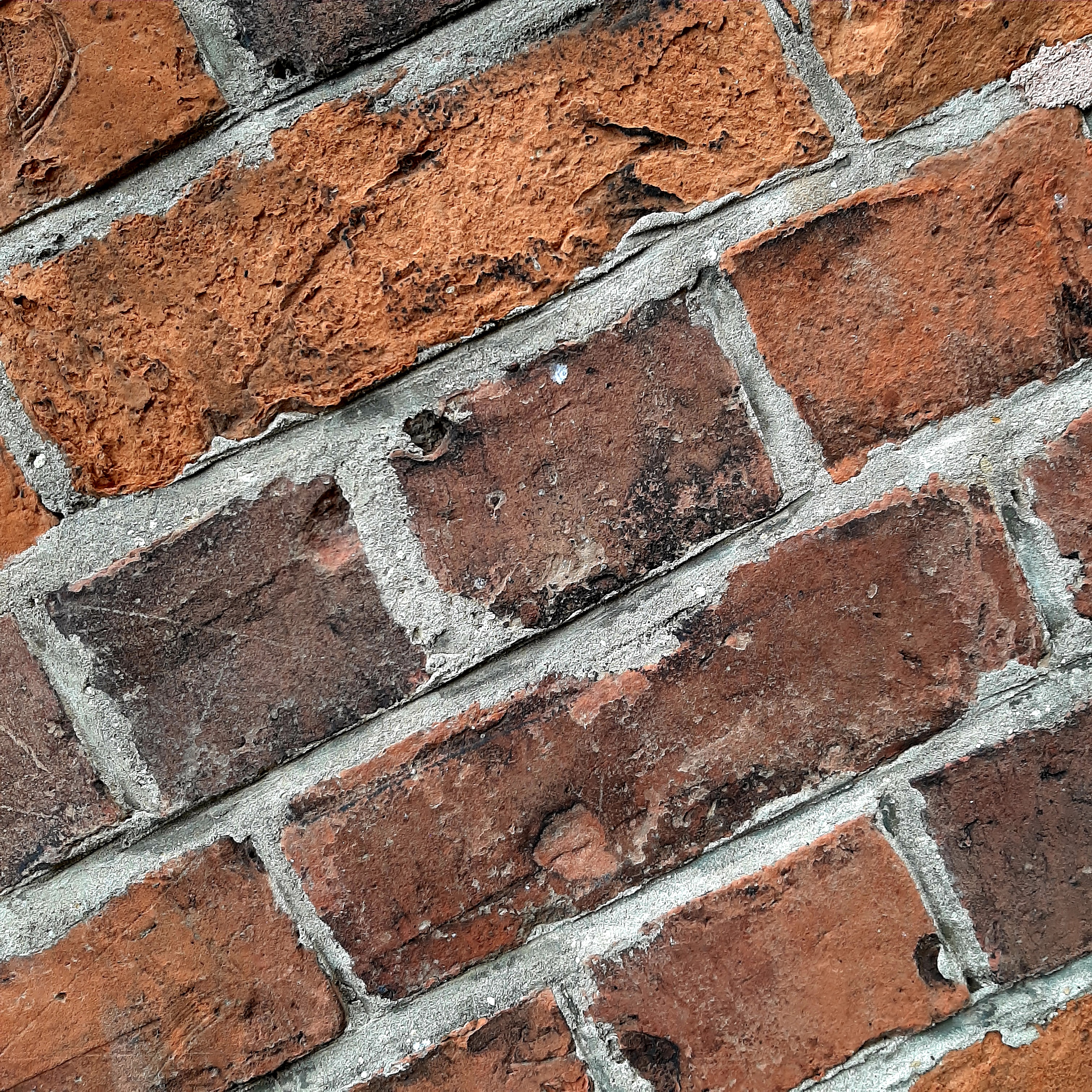
Modern features notwithstanding, what struck me most on my first visit to the town was how old it feels. In the centre, along the high street and the area around the church, the houses are hundreds of years old. Even where the facades appear newer, the buildings behind are constructed of traditional vernacular materials such as plaster and lath, half-timbering, cob, and stone. Some, like the building which is now a charity (thrift) shop and a barbershop, are adorned with pargetting (ornamental plaster). Centuries seep out of the walls of the buildings. Each is grounded, venerable, secure in its place, a survivor. Compared with the new-build boxes in the estates on the edge of town, which we drove past on the way in, these buildings are the ancestors which simply stayed, did not crumble and die, but remained rooted here in this community.
I find it interesting, though, that the town feels ‘old’ rather than ‘historic’. Although I’m sure there are ‘listed buildings’ here, and that there are conservation orders in place for many of the streets, it doesn’t feel like a historic theme park. Some places I’ve been – such as Holt in Norfolk, almost completely re-built in the Georgian period after a fire, or Stamford in Lincolnshire, with its picturesque stone buildings of homogenous limestone – are cohesive, visually harmonious, easy for the local tourist board to market as ‘historic’. Presteigne is different. Here, the buildings are jumbled together, built over centuries, fitted into gaps left by their predecessors, form following function. The have been re-worked over time to the needs of each successive generation of occupants, which storeys added, extensions built, windows and doors relocated or bricked up, cottages and workshops fitted into the back premises of the buildings that front onto the street. These aren’t picture-perfect ‘period homes’ – they are simply old houses, getting on with the business of living.
The contrast with the new houses on the estates is profound. It is, in essence, a contrast between convenience and character. These old houses are themselves – they have mass, substance, personality – they have their own stories. The new houses are just blank pages. Will the stories created there leave an imprint on the new buildings in the same way they have on the old? I doubt it somehow. The old buildings are not simply receptacles for living in. They are themselves protagonists, characters in their stories. They have adapted – with varying degrees of success – to the changes in society, in the way people live, and in technology, and the palimpsests of those changes are written upon them. Have the new houses been built to last enough centuries to gain their own palimpsests, their own ghosts, to be characters in their own stories? Looking at the neat estates of bungalows and semis, it’s hard to imagine. Yes, the new buildings are more economical to heat, have regular-shaped rooms, conform to modern building standards. But with little expectation that new-builds will last more than, perhaps, 60 years, issues of sustainability must be measured against the hundreds of years of service given by the timber frames and quarried stone walls of the old buildings. What does that difference in life expectancy say about our society’s attitude to homes, to permanence, to community?
Walking back through the high street to the car, I felt acutely aware of the long line of people who have come to Presteign in the last millennium and more, to live, to trade, to pause – as I was doing – on a journey. The buildings I passed have seen perhaps the last 20 generations of those people, who walked and shopped and greeted people on the street as I did that day. And in some indefinable way, the buildings are imprinted with their presence.





 The Three Hares Blog