Where did my interest in historic buildings, and the way we use them today, first start? Well, it all started with a quote from Winston Churchill. I can pinpoint the exact moment: I was a second-year undergraduate, sitting in a seminar on the history of Christian liturgy, and the lecturer was getting us to think about how the layout of a building both affects, and is affected by, the activity taking place within it. He quoted Churchill’s words: “We shape our buildings, and afterwards our buildings shape us.”
In 1943, Churchill was advocating for the retention of the adversarial, rectangular layout in the re-building of the Commons Chamber of the Houses of Parliament in London, following bomb damage in the Blitz during WWII. He attributed the two-party system, which he saw as the essence of British parliamentary democracy, to this layout.
In that moment, I realised that Churchill’s principle applied not only to ecclesiastical architecture and the layout of parliamentary debating chambers, but to the buildings we live and work in. At that time, my home was a tiny eighteenth-century stone cottage in a small town in North Wales, which showed signs of having been altered a number of times to accommodate changes of use. During its lifetime, it had reputedly been a mead house, and more recently a café, as well as a living and working space for artisan households (as evidenced in more recent centuries by census records). Meanwhile, at the heart of my university campus was the original nineteenth-century building, itself a pastiche of a medieval Oxbridge college – a style reflecting the ambitions of the founders for their fledgling educational institution.
I went on to live in a series of 19th-century terraced cottages, including one that was built for the workers on the newly-constructed railway; two Edwardian townhouses, one of which had been built as a living and working space for a family of glove-makers; a number of 1960s and 1970s boxes, in various stages of dilapidation, with the sensible, regular-shaped rooms that were a hallmark of the period, but all of them a challenge to make homely; a faux-Georgian 1980s house, complete with Grecian columns beside the front door and plasterwork urns and garlands on the fire-surround, but leaky windows and a collapsing sewage drain; and a smart newbuild with four bathrooms but next to no storage (which gives an insight into how architects envisage how people will live in the houses they design), which nevertheless proved to be a nice place to live. I learned that the nicest-looking houses don’t necessarily make the nicest homes, and that each property influenced how I lived through layout, storage (or the lack of it), heating (or the lack of it), and how safe and at home I felt there. I learned that I generally have a preference for older properties, made of stone or brick, which have stood for a century or more and promise to carry on standing – and sheltering those who live there – for the foreseeable future. I learned that I don’t mind the ghosts and echoes of previous lives that have been lived in the buildings I call home, but that I do mind houses that are soulless and sterile, however well-designed they may be.
Some years after the Churchill epiphany, I went back to university to study medieval monasteries, focusing on the relationship between their architecture and infrastructure and the patterns of daily living this facilitated. I then studied vernacular architectural styles, in particular becoming fascinated by palimpsests as evidence of how the people who lived and worked in these buildings continued to shape the evolution of the buildings that had shaped them.
I worked as a consultant, enabling communities to imagine new ways to use their historic buildings, balancing the need for flexible, warm and accessible places with the need to conserve the character and historic significance of the building. And I now advise on appropriate and effective energy efficiency measures to ensure that traditional buildings and their occupants continue to survive and thrive in the 21st century and beyond. For me, it’s part of an ongoing dialogue between place and people: “We shape our buildings, and afterwards our buildings shape us.”
I am committed to making this blog freely available, and not putting material behind a paywall. As a writer, I am doing what I love – but I still have to make a living. If you have enjoyed this post, and if you are able to do so, perhaps you would consider supporting my work by making a small contribution via the Buy Me A Coffee button. Thank you!
I am delighted to welcome Liza Achilles, a blogger based in Washington DC, USA, who has written a guest post for The Three Hares Blog.
Writing a historical novel was one of the most interesting activities I have done in my life. Unlike many other types of novel writing, historical novel writing requires a large amount of research. That research comes in several forms, as I will explain in this article. Below are 3 lessons I learned about writing a historical novel during my novel-writing journey. Perhaps these tips will help you if you tackle a historical novel project of your own.
#1 The Value of Visiting University Libraries
When I began researching my historical novel, I considered any book on my topic to be relevant. I stocked up on books from local bookstores and libraries. But I quickly discovered that not every book is of the same quality. Some books contain errors, unfair stereotyping, or generalities that gloss over key points. The books available at local bookstores and libraries were good for a cursory introduction to my subject; but to go deeper, I needed a university library.
I was fortunate that my husband (at the time) was affiliated (at the time) with first one university library and then another. Spouses were given, as a perk, a library card. I imagine that for some spouses, that wasn’t much of a boon. For me, it was a golden ticket to the stacks! (Many university libraries allow you to get a library card for a nominal fee if you don’t have a connection to the library.)
The excitement of browsing the stacks – there’s nothing like it. I would look up a subject on a computer and find a few call numbers. I would venture into some dark and crowded corner of some tower, and locate my book. I would then browse all of the nearby books, looking for something new and interesting. Often the book I took home would not be the book whose call number I found, but a book nearby in the stacks.
It was only with the help of these university books that I was able to correct errors, debunk stereotypes, and dig into important nitpicky details. All of this information was essential to crafting a novel that was as faithful as possible to the reality of what happened during my target time period.
#2 The Value of Visiting Historical Sites
No book about a location can replace a visit to that location. Books can and should supplement a visit. But there’s something powerful and special about experiencing a location in person – even if your visit does, of necessity, occur tens or hundreds of years after your target historical time.
Many historical sites have museums, plaques, monuments, grounds, or reenactments whereby you can immerse yourself in the history of the place. You can view some of the actual objects used by people during the historical period and walk on the actual terrain that was walked on back then. You can also talk with historical experts and read the extensive information provided at such sites.
I found immense value in visiting not just the site where my novel takes place, but also nearby and related sites. It’s always instructive to compare and contrast sites, to take in what is the same and consider what is different, and thus to better home in on your target historical location.
I also recommend touring public lands that aren’t part of any museum. Every place has its own flora and fauna, its own terrain and aura. Soak in the feel of the place, while being careful to distinguish between how things were during the historical time and how things are now. For example, invasive species might now inhabit the area, while other species might have gone extinct. Water levels and the climate might be different. (You can find this information through books and the Internet.)
#3 The Value of Using Primary and Secondary Sources
When researching a historical period, it’s important to distinguish between primary and secondary sources. Primary sources are writings done by people during the target time period. Secondary sources are writings done by people who came later, who wrote about the primary sources (or about other secondary sources).
Primary sources are a must-read because these are the people who were present when the action was happening. They are closest to your targeted time period and thus can be considered, in a way, most reliable. However, in another way, their reliability must be evaluated carefully, since being close to the action can result in all-too-human biases, mistakes, and sometimes even lies. This is where secondary sources come in.
Secondary sources are a must-read because these are the people who have carefully evaluated the quality of the primary sources and drawn conclusions not obvious in the primary sources. When well written, secondary sources are extremely reliable, and they may correct any factual errors, biases, or lies in the primary sources. However, when not well written, they may perpetuate errors, biases, or lies, or introduce new ones.
The bottom line is, dig into both primary and secondary sources, but read them critically and evaluate their reliability.
Conclusion
Research for a historical novel comes in several different forms. You might spend time visiting university libraries, touring historical sites, and consulting primary and secondary source materials. These activities helped me immensely while crafting my historical novel.
Are you working on a historical novel? What lessons are you learning from the experience?
Liza Achilles is a writer, editor, poet, and coach based in the Washington, D.C., area of the USA. She blogs about seeking wisdom through books and elsewhere at lizaachilles.com.
A few days ago I visited Presteigne, on the border of England and Wales (the counties of Herefordshire and Powys, to be precise). With a population of fewer than 3,000 people, Presteigne would be classed as a village in most parts of the country, but here in the remote and sparsely-populated hills it is a town, with shops and services drawing people from the surrounding hamlets and scattered dwellings. Sheep farming and tourism are the area’s main occupations, both capitalising on the sweeping hills and valleys of these unostentatiously beautiful borderlands, miles from anywhere.
Presteigne, which is called Llanandras in Welsh (loosely translating as ‘the enclosure around the Church of St Andrew’), is a historic town and was formerly the capital of the old county of Radnorshire (now subsumed into the administrative county of Powys). It still has the court house, now a museum, as a legacy from that era. The town is located beside the River Lugg, which forms the border between England and Wales. It has a long pedigree as a settlement, featuring in the Domesday Book of 1086 – however, it also has charging points for electric vehicles in the town car park, a trendy deli, a modern convenience store on the high street, and a Chinese take-away.
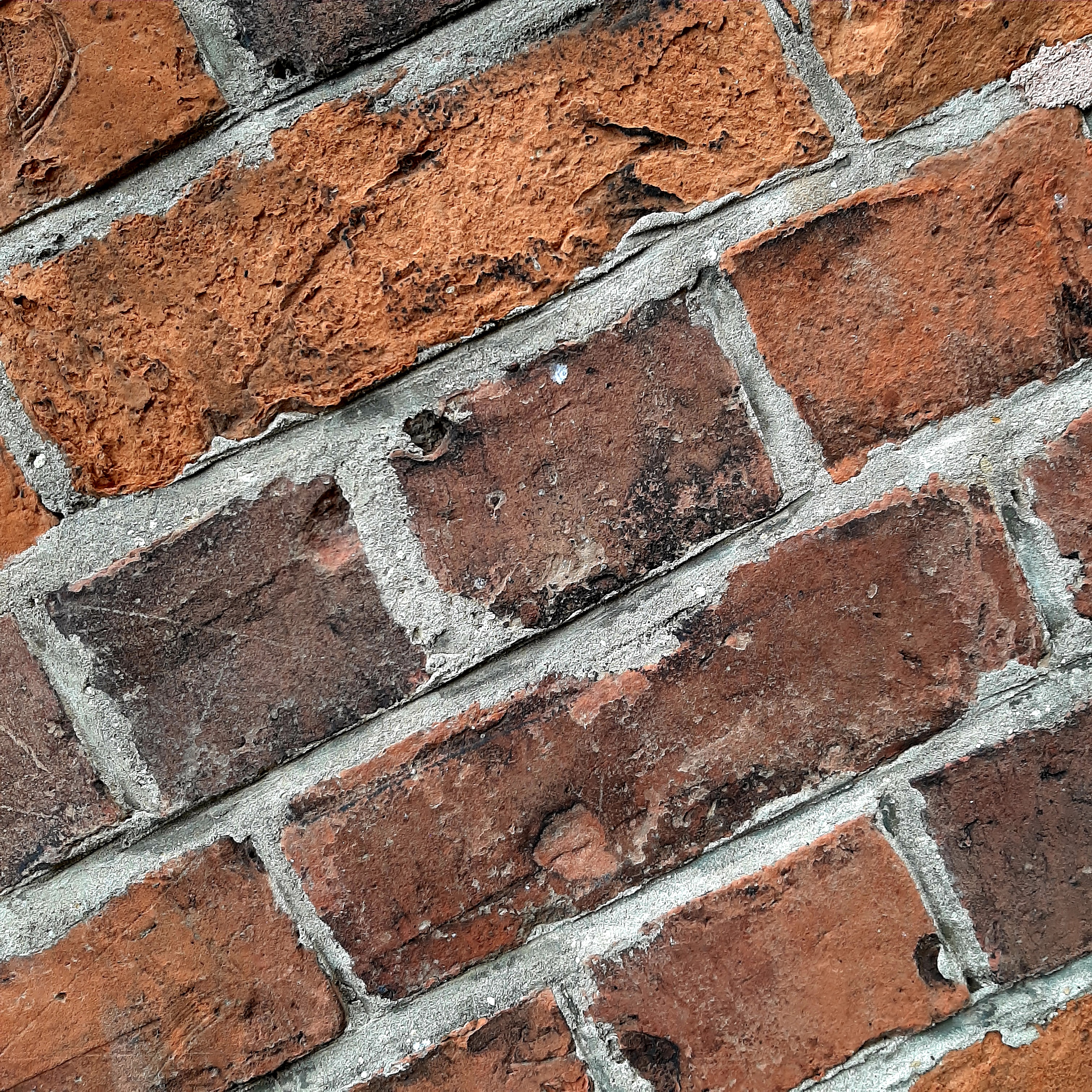
Modern features notwithstanding, what struck me most on my first visit to the town was how old it feels. In the centre, along the high street and the area around the church, the houses are hundreds of years old. Even where the facades appear newer, the buildings behind are constructed of traditional vernacular materials such as plaster and lath, half-timbering, cob, and stone. Some, like the building which is now a charity (thrift) shop and a barbershop, are adorned with pargetting (ornamental plaster). Centuries seep out of the walls of the buildings. Each is grounded, venerable, secure in its place, a survivor. Compared with the new-build boxes in the estates on the edge of town, which we drove past on the way in, these buildings are the ancestors which simply stayed, did not crumble and die, but remained rooted here in this community.
I find it interesting, though, that the town feels ‘old’ rather than ‘historic’. Although I’m sure there are ‘listed buildings’ here, and that there are conservation orders in place for many of the streets, it doesn’t feel like a historic theme park. Some places I’ve been – such as Holt in Norfolk, almost completely re-built in the Georgian period after a fire, or Stamford in Lincolnshire, with its picturesque stone buildings of homogenous limestone – are cohesive, visually harmonious, easy for the local tourist board to market as ‘historic’. Presteigne is different. Here, the buildings are jumbled together, built over centuries, fitted into gaps left by their predecessors, form following function. The have been re-worked over time to the needs of each successive generation of occupants, which storeys added, extensions built, windows and doors relocated or bricked up, cottages and workshops fitted into the back premises of the buildings that front onto the street. These aren’t picture-perfect ‘period homes’ – they are simply old houses, getting on with the business of living.
The contrast with the new houses on the estates is profound. It is, in essence, a contrast between convenience and character. These old houses are themselves – they have mass, substance, personality – they have their own stories. The new houses are just blank pages. Will the stories created there leave an imprint on the new buildings in the same way they have on the old? I doubt it somehow. The old buildings are not simply receptacles for living in. They are themselves protagonists, characters in their stories. They have adapted – with varying degrees of success – to the changes in society, in the way people live, and in technology, and the palimpsests of those changes are written upon them. Have the new houses been built to last enough centuries to gain their own palimpsests, their own ghosts, to be characters in their own stories? Looking at the neat estates of bungalows and semis, it’s hard to imagine. Yes, the new buildings are more economical to heat, have regular-shaped rooms, conform to modern building standards. But with little expectation that new-builds will last more than, perhaps, 60 years, issues of sustainability must be measured against the hundreds of years of service given by the timber frames and quarried stone walls of the old buildings. What does that difference in life expectancy say about our society’s attitude to homes, to permanence, to community?
Walking back through the high street to the car, I felt acutely aware of the long line of people who have come to Presteign in the last millennium and more, to live, to trade, to pause – as I was doing – on a journey. The buildings I passed have seen perhaps the last 20 generations of those people, who walked and shopped and greeted people on the street as I did that day. And in some indefinable way, the buildings are imprinted with their presence.
As regular readers of this blog will know, I am fascinated by history, and in particular ordinary people and how they lived their lives in the past. I am especially drawn to explore and respond to objects and artefacts – the more domestic the better. My friend Gina also knows this, and she told me the story of her clock. I’m grateful to her for allowing me to write it up and share it with you.
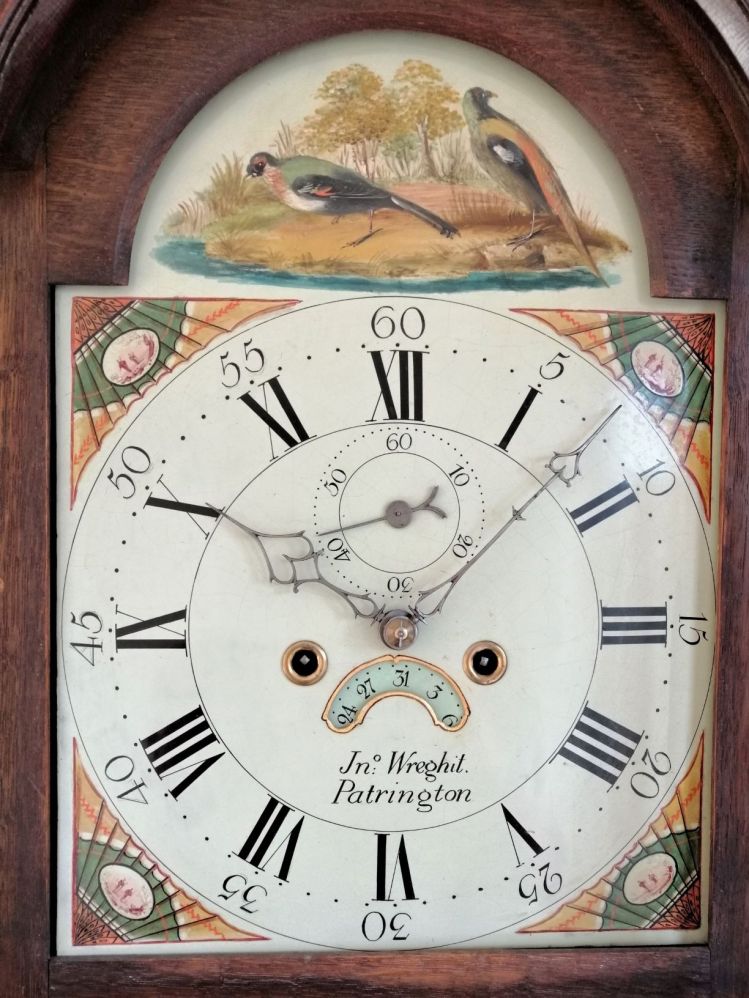
Gina has a clock. It’s a longcase clock, the kind that is usually called a Grandfather clock. Nothing very unusual about that, you might think, except that the mechanism (and probably the case) of this particular clock is 200 years old – and for most if not all of that time it has belonged to generations of Gina’s family.
The family story, Gina tells me, is that they have owned it from when it was first made by John Wreghit of Patrington, Yorkshire. I have done some research, and have found that John Wreghit (sometimes Wreghitt) was born around 1769 and died in 1845. He is buried in the churchyard of St Patrick’s Church, Patrington. He was apprenticed to Edward Hardy, clock and watchmaker of Kingston upon Hull, in December 1785, and in due course he himself took on an apprentice, John Potchit, in March 1801. An apprenticeship lasted 7 years. John Wreghit is listed as a watch and clock maker in trade directories between 1801 and 1841. In 1798 he married Ann Hopper. It seems their son James followed his father into the clockmaking trade, before dying in 1831 at the young age of 29. John and Ann had a number of children, not all of whom survived into adulthood – they reputedly had 9 daughters, one of whom, Margaret, married a John Rank. Margaret and John Rank’s grandson was Joseph Rank, who founded one of the largest flour milling and bakery companies in the UK in the 19th and 20th centuries, and which survived as part of Rank Hovis McDougall until 2007. Joseph Rank was a significant philanthropist, and was father to the even more famous J Arthur Rank.
The early years of the clock’s life are not recorded, but it is known to have been in Gina’s family by the beginning of the 20th century. Gina remembers the clock “when I was knee high”, when it was owned by her Great Aunt Ada (her grandmother’s sister) and Great Uncle Albert. “He was an ancient and very grumpy old man in a chair when I knew him – he must have been in his eighties when I was tiny. They lived in a prestigious street in Hull.”
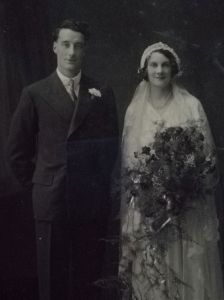
Ada and Albert’s wedding photograph has been handed down to Gina, and she now has it framed and displayed next to the clock. The clock itself has been recently restored, and now ticks and chimes at the heart of Gina’s home.
Gina often thinks of what the clock has witnessed in the past two centuries. It has marked births, and deaths. Family members will have checked the time in trepidation, and in hope, as it measured the significant events and everyday rhythms of their lives. Time will have seemed to crawl on dull days, or before some eagerly-awaited event, or flown by during family celebrations. The clock will have made sure that children got to school, and grown-ups to work, on time. The chimes will have counted down the hours during sleepless nights, and chivvied the tardy along by day. The clock will have been the beating heart of a succession of family homes.
And now, each tick and chime connects Gina with the people, her kin, who stand behind her through those past two centuries. I wonder if John Wreghit, as he crafted its mechanism in the days before Queen Victoria, could ever have imagined the significance and legacy his craftsmanship would have.
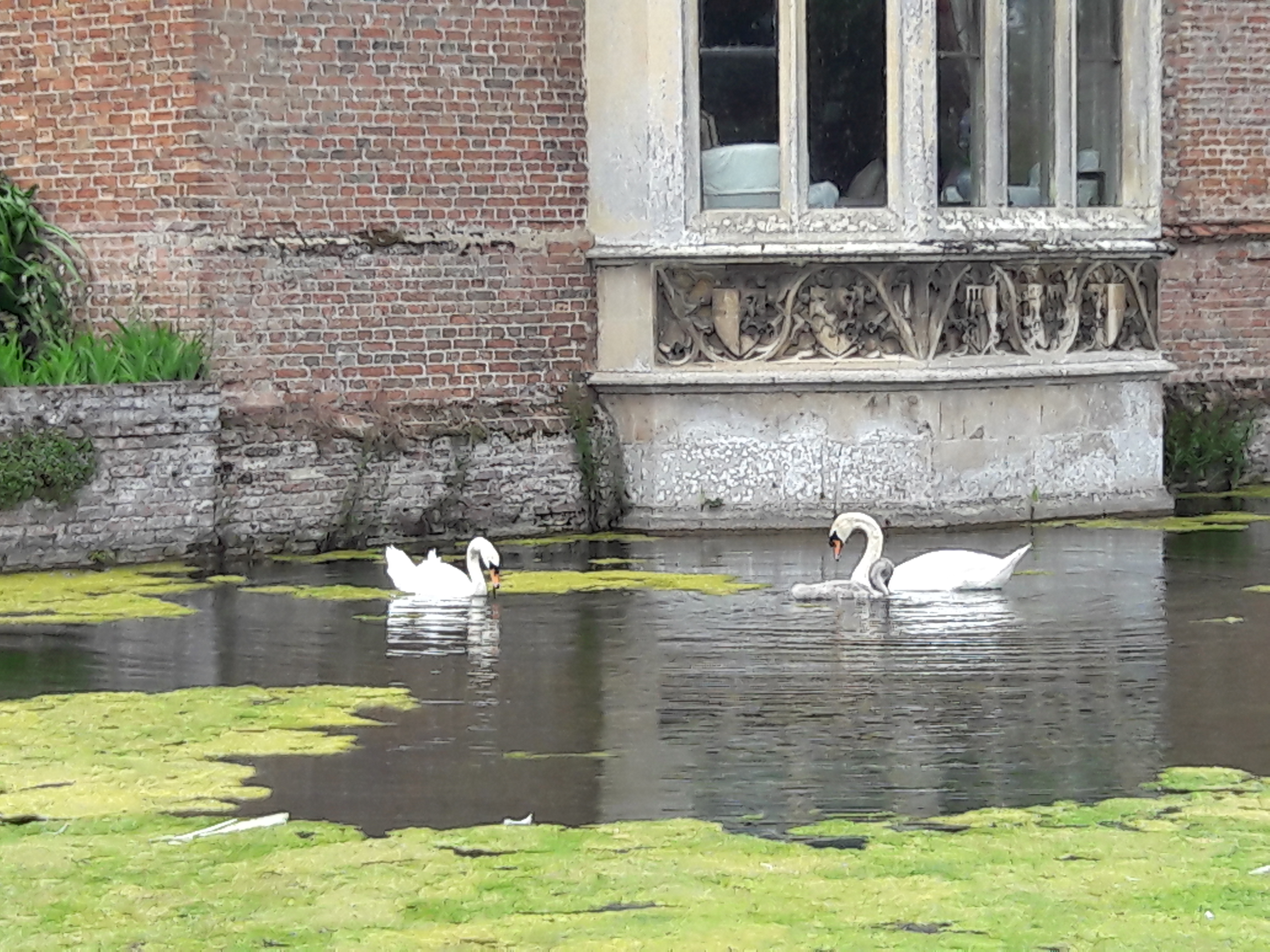
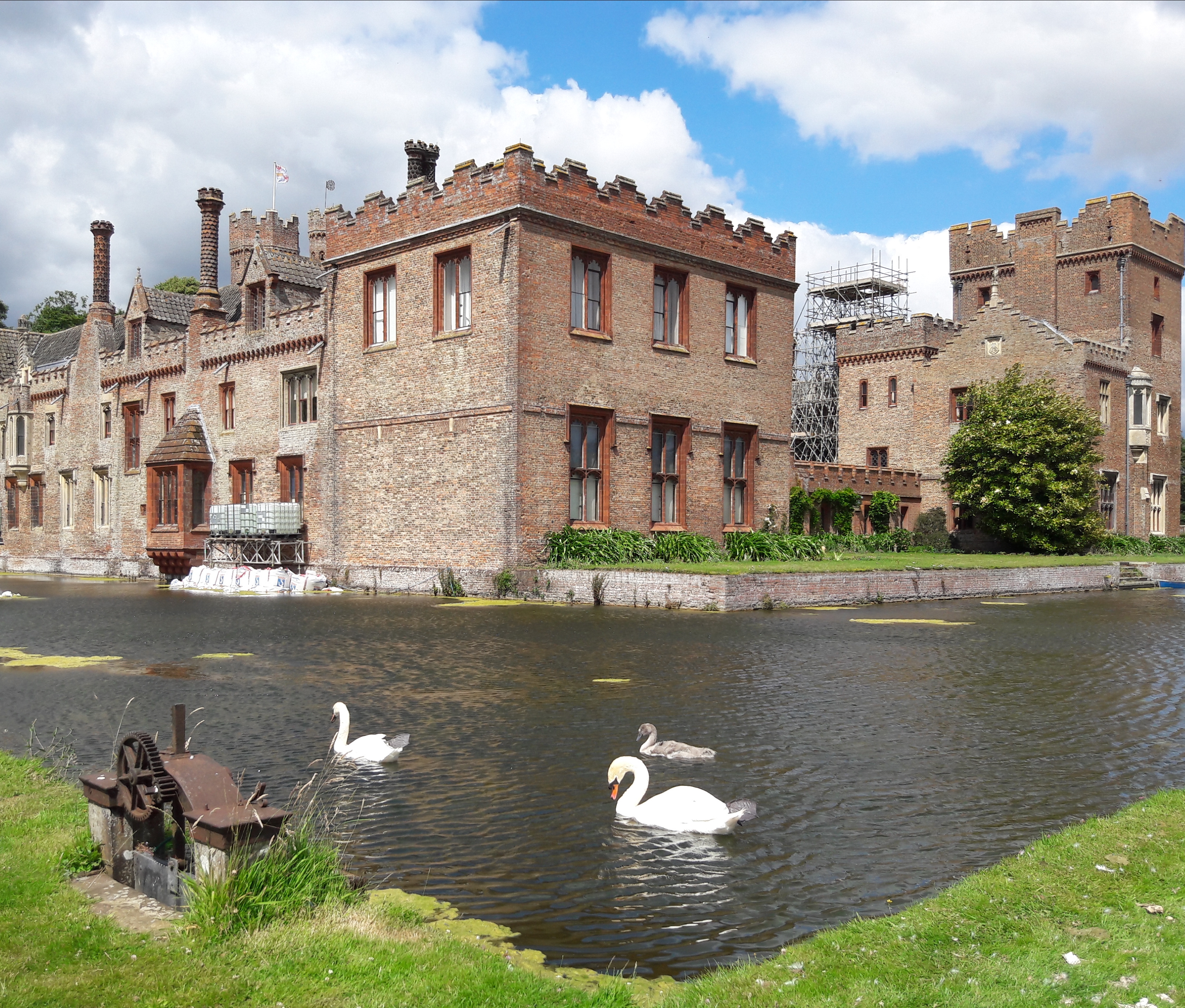
As the summer comes to a close, I’m sharing a family saga that’s been unfolding over the past few months. I am fortunate to have Oxburgh Hall (National Trust) just down the road, and the fine moat is home to a pair of swans. Last summer, while swan couples in the surrounding countryside reared their families, there were no little silver puffballs for the Oxburgh swans.
This year, however, they had more luck. Back in June, they were proudly showing off their single baby. Small, fluffy and grey, they guarded it fiercely. Any visitor venturing too near was seen off by a hissing parent. As an adult swan can easily break your arm if sufficiently cross, visitors wisely left well alone! We got some nice pictures though.
Cygnets (baby swans) are quite vulnerable. As well as having the usual youngsters’ talent for getting into life-threatening scrapes, when they are tiny they are also vulnerable to predators such as foxes, herons and raptors. Prolonged wet periods can cause them to get waterlogged and chilled, and in hot weather they can easily overheat. They can also be targeted by parasites, which weaken their system. About a third of hatchlings don’t make it past the first two weeks of life. They are not fed by their parents, but feed themselves from the start, so they have to learn quickly how to find enough suitable food to fuel their rapid growth.
On my next visit to Oxburgh, in July, I was thrilled to find that the lone cygnet was not only surviving, but thriving! The parents were a little less protective now that the crucial first couple of weeks were past, and our little cygnet was growing well.
Much less fluffy, s/he (too early to tell if it’s a cob or a pen) is a sturdy little thing, and seems to have mastered the art of hoovering food up out of the moat. It was actually quite hard to get a photograph, as the cygnet spent most of its time upended, feeding! I got dozens of pictures of its backside, but not many of its head…
Fast forward to late August, and there was a heart-stopping moment as we couldn’t find the swan family. We walked all round the moat, searched the fields, but there was no sign of them. Just as we were about to go and find a member of staff to enquire what had happened to the swans, we spotted them in the river beyond the moat. The cygnet is now HUGE! It is rapidly growing to be as big as its mother, and is confidently swimming off by itself.
I stood on the little footbridge to take this photograph, but had to move aside when the flotilla headed my way, with the parents hissing loudly – they wanted to swim under the footbridge, and objected to my presence! I obediently made way (I don’t argue with swans) and they ducked under the bridge and headed off downstream.
It’s been lovely to follow this youngster’s progress, and it’s great that the pair have finally managed to raise young – even if it is just the one. Maybe they are an inexperienced pair and they’ll be more successful in future years – it’s a good excuse to keep going back to Oxburgh Hall to find out!








 The Three Hares Blog